a diorama of an art exhibition


a diorama

of an art

exhibition

Thursday

the diorama background painter


The word diorama can either refer to a nineteenth century mobile theatre device, or, in modern usage, a three-dimensional full-size or miniature model, sometimes enclosed in a glass showcase for a museum.


in no particular order


Charles Shepard Chapman (1879-1962)
Chapman attended the Ogdensburg Free Academy and Pratt Institute, and was elected to the Council of the National Academy of Design in 1926. Chapman worked as an illustrator, but was best known for paintings of wilderness landscapes of the northern and western United States. Chapman painted the background for the mountain lion diorama in the American Museum's Hall of North American Mammals, which features the Grand Canyon.
and

George Browne (1918-58)
Trained by his father, Belmore Browne, George assisted him in the Hall of North American Mammals at the AMNH. Two of George Browne's background paintings can be found in the 1950s addition to the African Hall at the California Academy of Sciences.


and
Francis Lee Jaques (1887-1969)
Though Jaques had no formal art training, he was taught background painting by fellow artist Clarence C. Rosenkranz, and rose to become one of the Museum's most respected diorama artists. The majority of Jaques's backgrounds are at the AMNH, where he was employed as an artist from 1924 to 1942. In total he painted backgrounds for approximately eighty dioramas during his career. His diorama backgrounds can also be found at the Bell Museum of Natural History in Minneapolis; the Peabody Museum of Natural History in New Haven, Connecticut; the Academy of Natural Sciences in Philadelphia; the Boston Museum of Science; the University of Nebraska Museum; and the Illinois University Natural History Museum. Jaques is best known for his paintings of birds, especially waterfowl in flight. His greatest contribution to scientific illustration was his accompanying paintings for Robert Cushman Murphy's bookOceanic Birds of South America (1936). Collections of Jaques's bird paintings and studies can be found at the Peabody Museum, the Bell Museum, and the AMNH.


and
Chris E. Olsen (1880-1965)
Considered an expert amateur entomologist and general naturalist in addition to being a painter, Olsen is best known for undersea exhibits such as the Andros Coral Reef and the Pearl Diver dioramas in the Milstein Hall of Ocean Life. His work was not restricted to painting, and he was an extraordinary foreground artist and model-maker as well. Olsen retired in 1947 after more than thirty years with the AMNH.

Monday

opening and picnic in august

on sunday, august 15th...


a Musee16 field guide to the
No. 3 traveling art & museum exhibition

works by:

lost goat
greg schenk
gabi mendoza
takifugu
pippa possible
peter campbell
christina owen
james d. olsen
monica roache
noelle knight
janet pickle


atomization

a few interesting atomizers that we have in our shoppe...


Sunday

a sunday morning matinee


an unscientific point of view on the beginning and evolution of life ... and how it could probably end.

Tuesday

technical difficulties

this is a side note of a television museum.

here are three examples of some wonderful old television sets.

one can't help but to just stare at them now.
even with the knob turned off...
the screen still has a crisp clear image.

the television of yesteryear
might whisper something like:

'my picture is worth a thousand words...and
even though i only have 13 channels,
i guarantee you will find something to watch.'

even just saying the word 'television' has
a good modern technical sound connected to it.

a tiny museum on the moon


Another amazing fact about these tiny masterpieces is that they traveled into space without the official permission of NASA.moon-shot.jpg
It seems, in 1969 during preparations for Apollo 12, an unnamed NASA engineer helped artist Forrest “Frosty” Myers with his plan to spread art into space. The engineer attached a very small iridium-plated ceramic wafer measuring just 3/4″ x 1/2″ x 1/40″ and including miniaturized reproductions of the artworks to a hatch on the leg of the Intrepid landing module while it was at Bell Laboratories. The Intrepid was left behind on the moon when the astronauts returned to Earth.
The artists whose works were included on the chip were no slouches. In addition to Myers, the other five creative minds who contributed doodles were Andy Warhol, Robert Rauschenberg, David Novros, Claes Oldenburg, and John Chamberlain.
That’s right, there is a work by Warhol on the moon. No, it’s not another version of the ubiquitous Campbell’s soup can, but there are two different descriptions of Warhol’s lunar contribution. In a story in the New York Times in 1969 when Myers revealed his distribution of space art, the Warhol work was called “a calligraphic squiggle made up of the initials of his signature.” Others just say it looks like a penis, but that might have been too harsh a description to be printed for public consumption in 1969.
The Times story didn’t hit the stands until two days after Apollo 12 had left the moon, insuring that the space doodles would remain on the moon.
The chip wasn’t the only “art” on the moon’s surface on that historic trip in 1969. It seems some cheeky back-up crew members for the mission snuck some Playboy pictures into the astronauts’ checklists. Those nudes made a return trip to Earth...

a concise intermission found


Dadaism and Surrealism had a direct impact on many of the Beats: Dadaism with its attack on the elitism of high culture and its celebration of spontaneity;


Surrealism with its transformation of the Dadaist rebellion into positive social intentions and its focus on revelations from the subconscious.


Both movements, in a sense, developed as a reaction to World War I, just as the Beat Generation was reacting to the environment of post-World War II America.

Wednesday

meet the world's smallest traveling museum


Guess what my friends?
The long awaited, newfangled but equal to the former and recreated Musée has finally arrived.....
Meet the world's smallest traveling museum and gallery!


Thursday

today's morning matinee


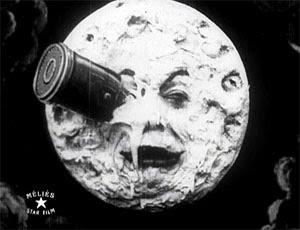
a little bit from..
1929 Jules Verne's
Mysterious Island

off to the shoppe


these are a few things i took down to the shop in old town orange...


a russian clock from a submarine
an electric calender
a grand canyon view master reel

[our little shop is in the basement of
it's about time antiques
on glassel street in orange, ca.-
going on about two years there...]

Monday

we are docked at...


we now have an address that you can send your handmade postcards
and inquisitive questions to :

Mariners Station - PO # 166
Seal Beach, Calif.
90740-0166


almost here


the airfloat is coming today!
and then it sunk...
the search went on.

Sunday

hot dogs and art


This Friday on 6th St. and Mesa in San Pedro, Calif...from 4-9pm..hotdogs, lemonade, art, music, beer ...miniramp ripping , Peter's tattoo give aways at Ship Shape Tattoo...silly music spinning at Sunkin city...oh and some of my art and others to be witnessed and silly pink bunnies... Friday April 2!


Saturday

postcards floating off the coast


this just in..
picked up the new and improved musée postcards from the printer yesterday.
they look really sharp on the old mossy card stock.
i am pleased.

Monday

A new Musée vessel!

After having accomplished nearly ten thousand leagues in three months and a half, a distance greater than the great circle of the earth. Where were we going now, and what was reserved for the future? -Verne

We have found our new Musée vessel!
It's an old trailer with portholes
and wheels to take us where ever the
show wants to go on dry land...
“Anything one man can imagine, other men can make real”
Jules Verne said this.